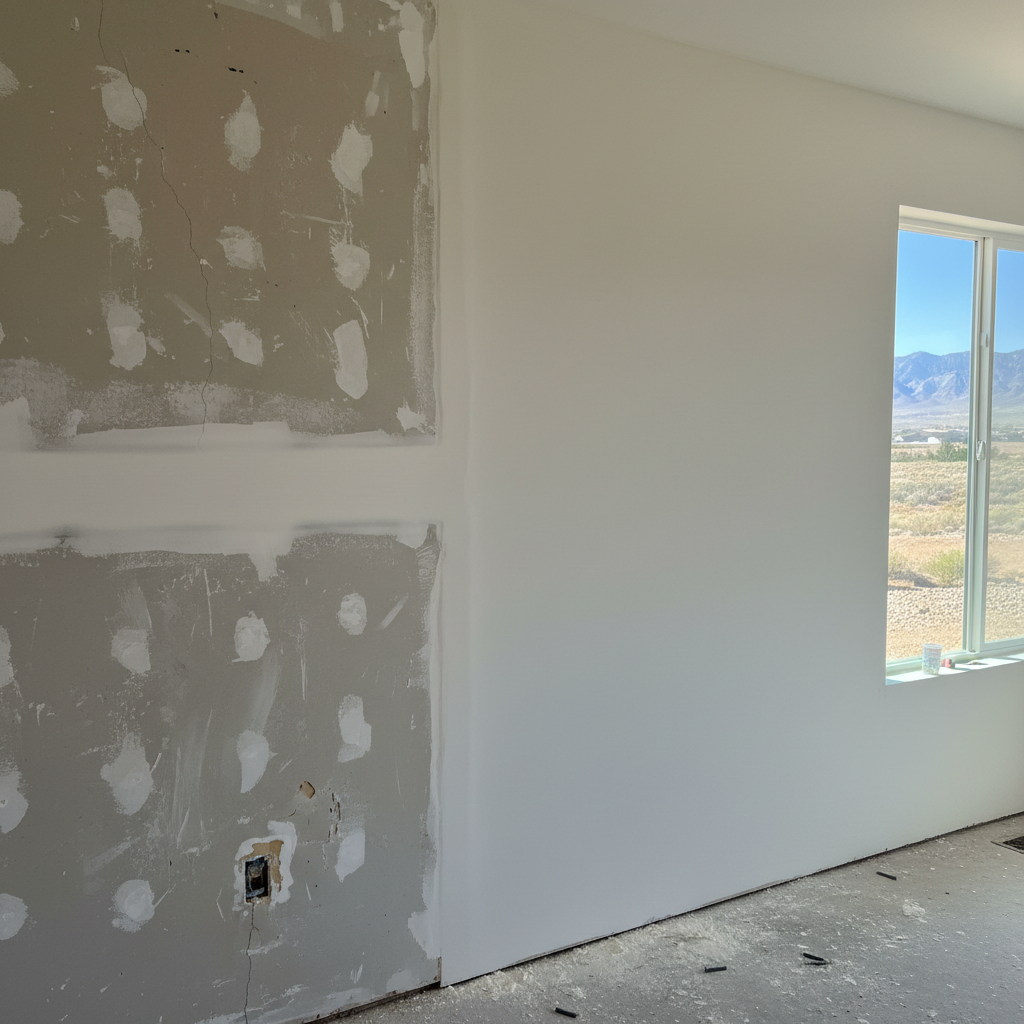
So, you're thinking about new drywall or maybe a big renovation, and someone throws out, "Smooth or textured finish?" If you're like most folks, you might just shrug. But honestly, this isn't just about how it looks. It hits your wallet, affects how long your walls stay looking good, and even dictates how much work they'll be down the road.
Smooth Drywall Finish: The Classic Look
This is probably what pops into most people's heads when they imagine a perfectly finished wall. It's flat, totally unblemished, and ready for paint. It gives off a clean, modern vibe that's super popular these days, especially in those newer homes you see popping up all over Layton and Syracuse.
- Appearance: Sleek, modern, and feels high-end. It's basically a blank canvas, letting your paint color or decor really shine.
- Cost: Generally, a smooth finish costs more upfront. Why? Well, it demands more skill, more time, and more materials – specifically, more coats of mud and a whole lot more sanding – to get it just right. Every tiny flaw screams for attention, so the crew has to be on their A-game.
- Durability & Maintenance: Here's where smooth can be a bit of a double-edged sword. Sure, it's tough, but it shows every single ding, dent, and scuff. Bump a chair into it? You'll see it. Got kids? You'll probably be doing touch-ups more often. Dust and dirt don't have anywhere to hide, so cleaning is easy, but any repairs need to be absolutely perfect to blend in.
- Repairability: Patching a smooth wall so it's truly invisible is an art. It's not impossible, but it definitely takes a skilled hand to match the existing finish.
Textured Drywall Finish: Hiding a Multitude of Sins
When I talk about textured finishes, I'm usually thinking about things like orange peel, knockdown, or sometimes even a light skip trowel. These aren't the popcorn ceilings from the 80s, thank goodness. Modern textures are subtle and can actually add some nice depth to a room.
- Appearance: Adds character and can feel a bit warmer or more traditional, depending on the texture you pick. It can also help diffuse light, which is pretty nice in rooms with a lot of natural light.
- Cost: Usually less expensive than a smooth finish. The texture itself helps hide minor imperfections in the drywall installation and taping, meaning less sanding and fewer coats of mud are needed. It's quicker to apply, too.
- Durability & Maintenance: This is where texture really shines, especially for homes with a lot going on. Those little bumps and valleys? They're fantastic at hiding minor dings, scuffs, and fingerprints. If you live in an older home in Layton, maybe one of those brick ramblers near Hill Air Force Base, you might really appreciate how texture can mask a wall that isn't perfectly plumb. Cleaning can be a tad trickier since dust can settle in the texture, but it's not a deal-breaker.
- Repairability: Much, much easier to repair. You can texture a small patch to match the surrounding wall, and it blends in a lot more forgivingly than a smooth repair.
My Recommendation for Layton Homeowners
Look, I've been doing this for a while with New Look Drywall Co, and I've pretty much seen it all. For most homes in Layton, especially if you've got an active family, pets, or just want a wall that's going to hold up without showing every little imperfection, I lean towards a light textured finish. Something like a subtle orange peel or a light knockdown is a really good compromise.
Here's why:
- Durability for Everyday Life: We actually live in our homes, right? Walls get bumped. Kids play. Texture just handles life better.
- Cost-Effectiveness: You'll save a bit upfront, and you'll probably save on future repair costs too.
- Hides Imperfections: Let's be honest, no wall is ever 100% perfect. Texture helps mask those tiny flaws that would stick out like a sore thumb on a smooth wall.
- Matches Our Climate: Our dry Utah climate means wood framing can shift a bit over time, sometimes causing hairline cracks. Texture helps hide these better than a perfectly smooth surface.
Now, if you're really going for a super modern, minimalist look, or you're building a custom home where every single detail is planned out and you're cool with paying for that perfection and extra maintenance, then a smooth finish is absolutely beautiful. Just make sure you know what you're getting into.
Ultimately, the choice is yours, but I hope this gives you a clearer picture of what each option really means for your home and, well, your sanity.