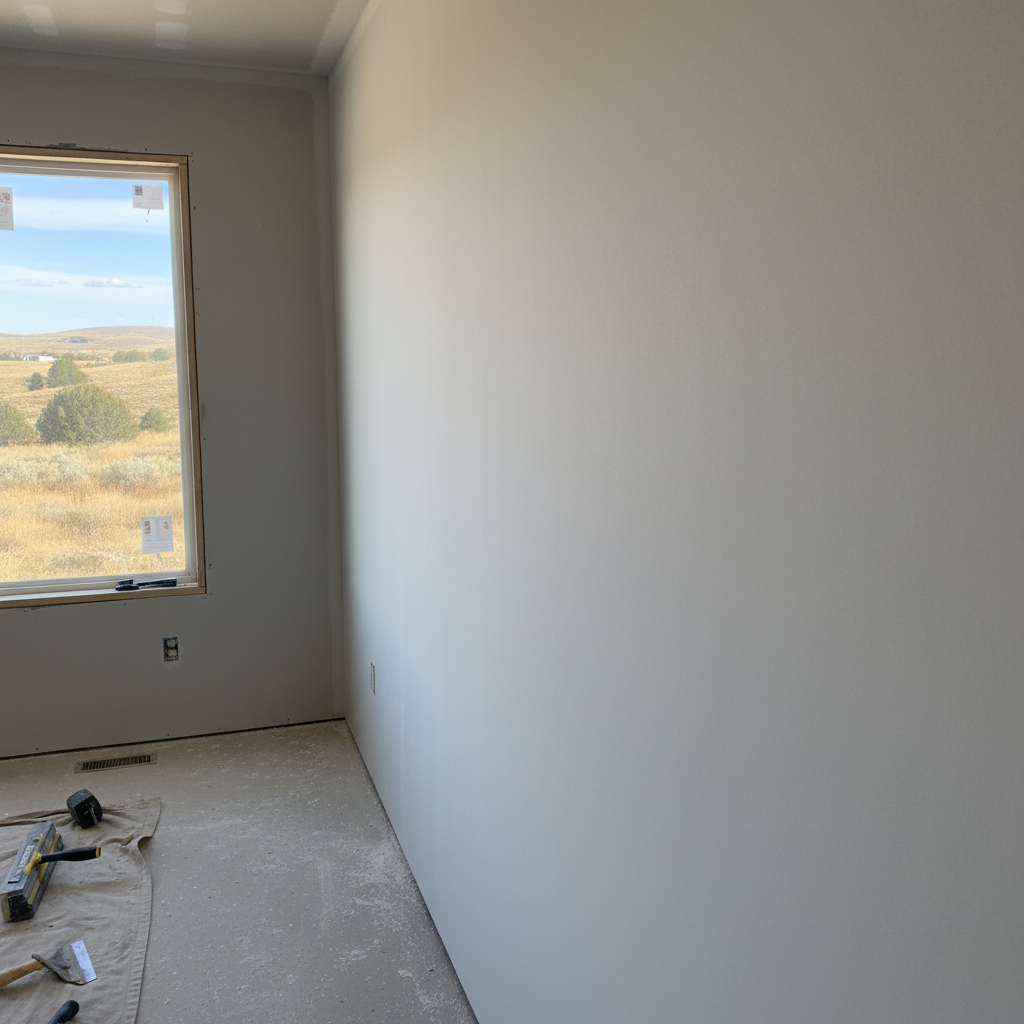
Got questions about putting up new drywall in your home? You're definitely not alone. I chat with homeowners all over Layton, from those charming older places near the Layton Hills Mall to the brand-new builds up by the mountains, and there are always a few common things folks want to know before they jump into a project. Let's dive into some of those, shall we?
What's the difference between regular drywall and moisture-resistant (greenboard/blueboard)? Do I really need it?
Okay, so 'regular' drywall, which people often call gypsum board or Sheetrock, is your standard stuff. It works great for most areas of your house – living rooms, bedrooms, hallways, that kind of space. It's pretty affordable, too, and easy to work with.
Then you've got moisture-resistant drywall, often called 'greenboard' or sometimes 'blueboard.' Greenboard comes with a special paper facing that helps push away moisture, and it's treated to fight off mildew. You absolutely want this in spots like bathrooms, laundry rooms, and basements where humidity and moisture hang around. It's not waterproof, mind you, but it handles dampness a lot better than standard drywall. Blueboard is a bit different; it's made specifically for veneer plaster systems, so you wouldn't really paint it directly. For most homeowners, if moisture is on your mind, you're probably thinking about greenboard.
Do you really need it? If it's a bathroom, kitchen, or any area that gets high humidity or potential water splashes, then yes. Cutting corners here can lead to mold issues down the road, and believe me, dealing with mold is way more expensive and annoying than just installing the right drywall in the first place. We see it all the time in older Layton homes where people tried to save a buck.
How long does a typical drywall installation project take?
That's a tough one to give a single answer for, because it truly depends on the size and how complicated the job is. A small room, let's say a 10x12 bedroom, might take a couple of days just for hanging the sheets. Then you're looking at another two to three days for taping, mudding, and sanding. So, for a single room, you're probably looking at about a week, assuming everything goes smoothly and the mud has enough time to dry between coats.
For a whole house, or a big remodel, you're talking weeks. Hanging goes pretty fast with a good crew, but the finishing — that's where the time really adds up. There are multiple coats of mud, and each one needs to dry completely before the next one can go on. Rushing that process is a recipe for cracks and a poor finish. We generally tell folks to expect two to four weeks for a decent-sized home, from start to a paint-ready finish. It's a process, and you just can't rush quality.
What kind of mess should I expect during the installation?
Oh, you'll get dust. Lots of it. Drywall dust is super fine, and it manages to get everywhere. We do our absolute best to keep it contained – we'll put up plastic sheeting, tape off doorways, and cover floors and furniture in nearby areas. We use vacuums with HEPA filters when we're sanding, and we're always cleaning up as we go. But even with all those precautions, some dust will inevitably escape. It's just how it is with this kind of work.
It's a good idea to move anything valuable out of the work area, cover furniture you can't move, and be ready for a good cleaning of your home once we're finished. We'll do a final cleanup, but you'll likely want to do your own deep clean afterward. It's just part of the deal when you're doing construction work, right?
Can I stay in my house while you're installing drywall?
Technically, yes, you can. Is it comfortable? Probably not. Like I just said, there's a lot of dust, and there's also noise from cutting and screwing, plus the smell of the mud. If it's just one room, and you can close it off and stay away, it might be manageable. But if we're working on a large part of your house, or multiple rooms, it's going to be pretty disruptive.
Most folks find it's easier to make other arrangements, especially during the sanding phase. If you have pets or young children, it's even more important to think about their comfort and safety. We'll work with you to keep disruptions to a minimum, but don't expect a quiet, dust-free environment while we're on the job.
What's the deal with different drywall thicknesses? When do I need 1/2 inch versus 5/8 inch?
The most common thickness you'll see in homes is 1/2 inch. It's lighter, easier to cut, and perfectly fine for most walls and ceilings in your house. It's what we use for the vast majority of our projects here at New Look Drywall Co.
Then you've got 5/8 inch drywall. This stuff is thicker, heavier, and offers a few perks. It's more rigid, so it's less likely to sag, especially on ceilings with wider joist spacing. It also helps block more noise – meaning better sound attenuation – and it has a higher fire rating. Building codes often require 5/8 inch drywall in specific spots, like between a garage and living space, or in certain multi-family buildings, because of that fire resistance. If you're looking for extra soundproofing between rooms, or if your ceiling joists are spaced further apart than 16 inches on center, 5/8 inch is probably the way to go. Otherwise, 1/2 inch usually does the trick.
Do I need to worry about the cold weather here in Layton affecting drywall installation?
Absolutely, you do. Our winters here in Layton can get pretty cold, and temperature and humidity play a huge role in how drywall mud dries and cures. If it's too cold, the mud won't dry properly, which can lead to cracking, poor adhesion, and a weak finish. We generally need the temperature in the work area to be consistently above 50-55 degrees Fahrenheit, both during the day and overnight.
If we're doing work in an unheated garage or a new addition before the HVAC is fully running, we'll need temporary heat. This isn't just about comfort; it's about making sure the materials perform like they should. Trying to mud in freezing temperatures is a waste of time and money, and it'll just cause problems down the road. We always make sure the environment is right before we start any finishing work.
Hopefully, that clears up some of your biggest questions. If you're planning a project and still have concerns, don't hesitate to reach out. We're always happy to talk you through it.