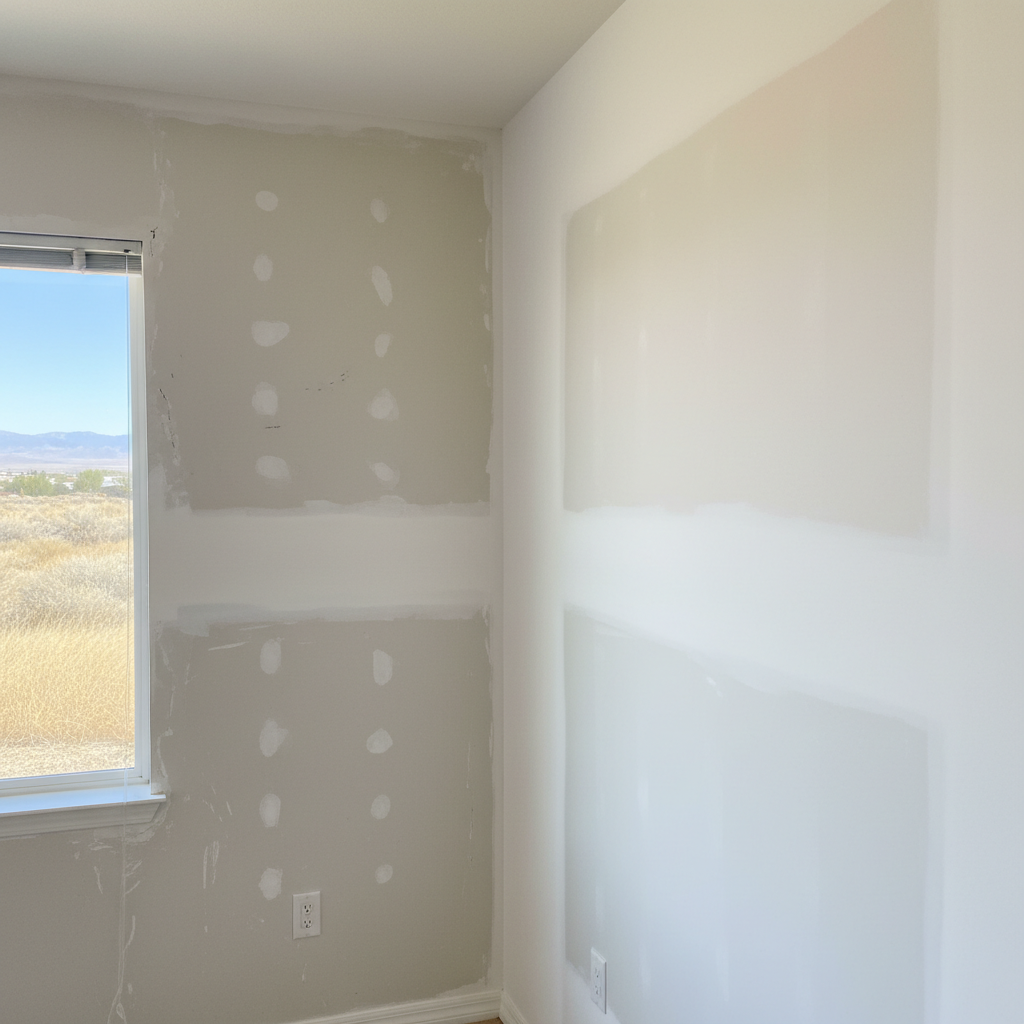
So, you've got a ding, a hole, or maybe even a bigger mess on your drywall. It happens, doesn't it? Your kid's baseball, moving furniture, a plumbing leak – whatever the culprit, you're now staring at damaged sheetrock. Naturally, you're wondering, "What's the best way to fix this?" Basically, you've got two main options: patching just the specific spot or cutting out a larger section and replacing a whole panel. Let's dig into the good and bad of each, especially for us folks here in Layton.
The Quick Patch: Good for Small Stuff
When I talk about patching, I mean cutting out the damaged bit, fitting in a new piece of drywall, taping the seams, mudding, sanding, and then painting. This is your go-to for smaller holes – anything from a fist-sized ding to maybe a foot or two square. It's often quicker, uses less material, and can be less disruptive to your home.
- Cost: Generally, it's cheaper. You're buying smaller pieces of drywall, less mud, and less tape. If you're tackling it yourself, your material cost is pretty minimal. If you hire someone like us at New Look Drywall Co., it's definitely less labor than a full panel.
- Durability: If someone does it right, a patch is just as tough as the wall around it. That "done right" part is key, though. A poorly installed patch can crack or show through over time, especially if the new piece isn't secured well or the mud isn't feathered out properly.
- Maintenance: Once it's painted, it's just like any other part of your wall. No special upkeep needed.
- Appearance: This is where patches can get a little tricky. Matching textures and paint can be a real headache. Older homes, especially those built in the 70s and 80s around the Sun Hills or East Layton areas, often have unique textures that are tough to get just right. You might end up with a "ghost" of the repair if the texture or paint isn't spot on.
Full Panel Replacement: For Bigger Headaches
This approach means cutting out a much larger section of drywall, often from stud to stud, or even replacing an entire sheet. You'd go this route for really extensive damage, like a big water stain that's ruined the board's integrity, a huge hole that spans multiple studs, or if you've got several smaller damages in one area that just make more sense to tackle all at once. What a pain, right?
- Cost: Higher, absolutely. You're buying full sheets of drywall, more mud, more tape, and it just takes more time to cut, hang, and finish.
- Durability: Excellent. When you replace a full panel, you're essentially putting up a new, seamless section of wall. There's less chance of future cracking at seams because you're working with fewer, longer seams that are easier to finish correctly.
- Maintenance: Same as a patch – once it's done, it's simply part of your wall.
- Appearance: This is where full panel replacement really shines. Because you're working with a larger, consistent surface, it's much easier to achieve a seamless look. Texture matching becomes less of a spot-repair nightmare and more of a blend-into-a-larger-area task, which usually gives better results. You get a much more uniform finish, which is super important if your walls have a smooth finish or a really subtle texture.
My Recommendation for Layton Homeowners
For small, isolated damage – think a door handle ding or a little nail pop – a well-done patch is usually fine. You'll save some money and time. But if you're dealing with anything bigger than, say, a dinner plate, or if you have multiple damaged areas close together, I almost always lean towards replacing a full panel. Especially here in Utah, with our dry winters and sometimes humid summers, the expansion and contraction can make poorly done patches stand out over time. A full panel replacement gives you a more stable, long-term fix that blends in better.
It's about getting it right the first time. You really don't want to be looking at that repair for years, wishing you'd just done it properly. Sometimes paying a little more upfront for a full panel replacement saves you headaches and money down the road when you don't have to redo a bad patch. Give us a call at New Look Drywall Co. if you're not sure which route to take. We can come take a look and give you an honest opinion.